

 By
By The e-commerce sector is buzzing with innovations. Among the most ground breaking is the integration of Artificial Intelligence (AI) as a Service (SaaS) tools. These tools are not just trendy words thrown around to sound tech-savvy; they are revolutionizing how we understand and interact with e-commerce. Why, you ask? Let’s dive in.
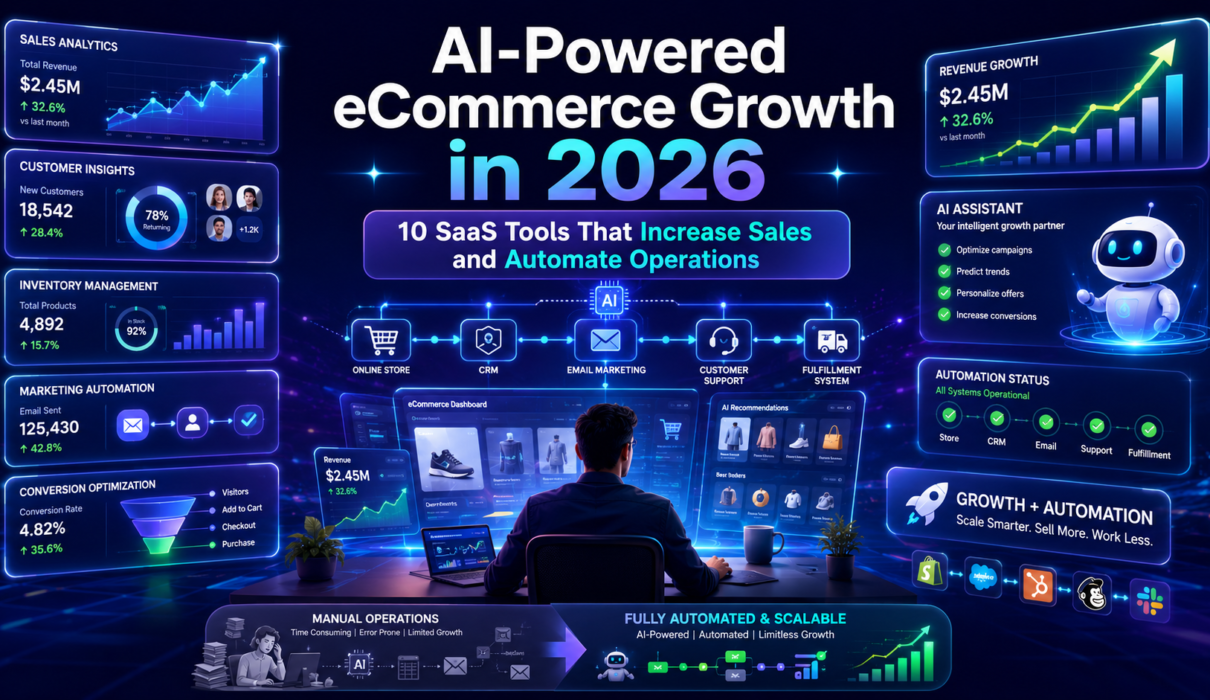
In 2026, successful online stores are using AI-powered SaaS tools to automate customer support, personalize shopping experiences, optimize marketing campaigns, improve product discovery, and increase average order value.
Whether you’re running a Shopify store, a WooCommerce business, or a large-scale online marketplace, the right AI tools can help you scale revenue without proportionally increasing operational costs.
This guide explores the best AI tools for eCommerce in 2026 and explains how they can help increase sales, improve customer experience, and streamline operations.
Why AI Matters for eCommerce in 2026
Modern shoppers expect:
- Personalized recommendations
- Faster customer support
- Accurate product search
- Tailored marketing messages
- Seamless shopping experiences
AI enables businesses to deliver all of these at scale. AI-driven personalization, automation, and intelligent workflows are among the biggest SaaS trends shaping 2026, influencing how online businesses compete and grow.
According to industry reports, AI-powered personalization alone can significantly improve conversion rates and customer retention when implemented effectively.
The Rise of SaaS in E-commerce
Software as a Service (SaaS) is the cherry on top. Instead of purchasing and maintaining expensive software, businesses can now subscribe to services tailored for them. This model offers flexibility, scalability, and, with the power of AI, unmatched efficiency.
Top 10 AI SaaS Tools Boosting E-commerce Sales
Now that we’ve set the stage, let’s delve into the tools that are making waves. To unlock the full value of AI, businesses need connected systems and modern SaaS integration strategies that allow data to flow seamlessly across platforms.
1. Chatbots & Virtual Assistants
Tools like Drift or Intercom use AI chatbots to provide instant customer support and guide shoppers through the buying process.
What they do: Automate customer service, answer queries, and provide product recommendations.
Why they matter: Immediate responses can increase sales and enhance customer satisfaction. Remember the last time you had a query and got an instant answer? Pure gold!

2. Predictive Analytics Tools
Platforms like Dynamic Yield and Barilliance employ AI to analyze customer behavior and offer personalized product recommendations, increasing cross-selling and upselling opportunities.
What they do: Analyze customer data to predict future behaviors and trends.
Why they matter: It’s like having a crystal ball that tells you what your customers want even before they know it.
3. Personalization Engines
Repricer tools like Wiser or Informed.co use AI algorithms to adjust product prices dynamically, ensuring competitive pricing and maximum profitability.
What they do: Offer personalized product recommendations based on user behavior.
Why they matter: Who doesn’t like a personal shopper suggesting the best picks?

4. Visual Recognition Tools
AI-powered visual search engines like Slyce or Pinterest Lens allow customers to search for products by uploading images, making it easier to find what they want.
What they do: Enable image-based searches and product tagging.
Why they matter: Sometimes words fall short. A picture is worth a thousand words, right?

5. AI-Driven Inventory Management
AI-driven inventory management systems like Llamasoft or Lokad optimize stock levels, reducing overstock and stockouts.
What they do: Predict stock demand, and optimize inventory levels.
Why they matter: Overstocking or understocking? Neither! Just the right amount is the mantra.

6. Dynamic Pricing Tools
Using a set of rules and criteria, a dynamic pricing tool is a strong solution that proposes prices for your products. Establish your product’s specifications and raise prices to be more competitive.
What they do: Adjust prices in real-time based on demand, competition, and other factors.
Why they matter: Have you ever noticed how flight prices change? Imagine that for every product!
7. Customer Insights Platforms
Customer analytics tools such as Bluecore and Custora leverage AI to gain insights into customer behavior, helping businesses create more targeted marketing campaigns.
What they do: Offer deep insights into customer behaviors and preferences.
Why they matter: Knowledge is power. Knowing your customer? That’s a superpower!

8. Voice Search Optimization
Some SEO professionals claim that voice SEO is necessary for websites to properly appear in search results for voice assistant searches.
What they do: Optimize your e-commerce platform for voice searches.
Why they matter: “Hey Siri, find me the best AI tools for e-commerce.” Enough said.

9. Retargeting Solutions
Tools like Olapic and Curalate allow businesses to gather user-generated content and use AI to make it shoppable, increasing user engagement and conversions.
What they do: Target users who’ve shown interest in products but have yet to make a purchase.
Why they matter: A gentle nudge can sometimes make all the difference.


10. Fraud Detection Systems
AI-based fraud detection solutions like Sift and Signifyd help e-commerce businesses identify and prevent fraudulent transactions, reducing chargebacks and losses.
What they do: Detect and prevent fraudulent transactions.
Why they matter: Safe customers are happy customers.
Many AI-powered eCommerce platforms rely on modern cloud infrastructure, making cloud data migration strategies increasingly important for growing businesses.
Frequently Asked Questions
AI-powered eCommerce tools are software solutions that use artificial intelligence to automate and optimize tasks such as product recommendations, customer support, pricing, marketing campaigns, inventory forecasting, and customer personalization. These tools help online businesses improve efficiency and increase sales while reducing manual work.
AI helps increase eCommerce sales by analyzing customer behavior and delivering personalized shopping experiences. It can recommend relevant products, automate marketing campaigns, improve search results, optimize pricing strategies, and provide instant customer support, all of which contribute to higher conversion rates and increased revenue.
The best AI tool depends on your goals. Shopify Magic is ideal for built-in AI automation, while Klaviyo excels at email marketing and customer segmentation. Rebuy is popular for upselling and cross-selling, and Tidio AI is widely used for customer support automation.
Yes. Many AI-powered SaaS tools offer affordable plans that help small businesses automate repetitive tasks, improve customer engagement, and compete with larger brands. Even basic AI implementation can save time and improve sales performance.
Absolutely. AI can automate email campaigns, social media content creation, ad optimization, audience segmentation, and customer lifecycle marketing. Platforms such as Klaviyo, Jasper AI, and AdCreative.ai are commonly used for marketing automation.
In Conclusion,
Remember that the effectiveness of these tools may vary depending on your specific e-commerce business and goals. It’s essential to assess your unique needs and choose the tools that align best with your objectives and customer base. Additionally, consider integrating AI tools that can work seamlessly with your existing e-commerce platforms and systems for a more streamlined operation. If you’re evaluating broader AI adoption beyond eCommerce, explore our guide to the best AI tools for small businesses in 2026.